Thursday, 27 November 2025

Maintenance and Installation Best Practices for Instrumentation Tube Fittings and Accessories

 Instrumentation systems form the backbone of process industries where precision, control, and safety are critical. Within these systems, instrumentation tube fittings and accessories play a vital role in ensuring leak-free connections and reliable flow control. However, even the highest-quality fittings can fail if not installed and maintained properly. Understanding the correct installation methods and adopting regular maintenance practices can dramatically extend system life, reduce downtime, and improve safety performance.

The Importance of Proper Installation

Instrumentation tube fittings are engineered to deliver leak-free and pressure-tight connections in demanding environments. But improper installation—such as over-tightening, misalignment, or incorrect tube preparation—can lead to leakage, vibration failure, or system inefficiency.

Correct installation ensures:

  • Optimal sealing integrity

  • Reduced wear on ferrules and threads

  • Resistance to vibration and mechanical stress

  • Long-term reliability in high-pressure conditions

Neglecting installation precision can compromise the entire system, especially in industries such as oil & gas, petrochemical, and pharmaceutical, where fluid leakage can lead to safety hazards and costly shutdowns.

Step-by-Step Installation Best Practices

Following a systematic approach ensures a safe and durable fitting connection.

  1. Tube Preparation:

    • Cut the tubing square using a proper tube cutter.

    • Remove burrs from both the inner and outer edges to prevent flow restriction or ferrule damage.

  2. Tube Insertion:

    • Insert the tube fully into the fitting body until it seats firmly against the shoulder.

    • Ensure correct alignment to avoid angular stress during tightening.

  3. Initial Tightening:

    • Finger-tighten the nut to the body, ensuring the ferrules are positioned correctly.

    • Use a wrench to tighten the nut according to the manufacturer’s recommended turns (usually 1¼ to 1½ turns beyond finger-tight).

  4. Verification:

    • Check for proper engagement of the ferrule and fitting body.

    • Mark the nut and body for reference during maintenance inspections.

  5. Testing:

    • Conduct pressure or leak tests using inert gases or clean water before connecting to the main system.

Following these steps minimizes the risk of leakage and ensures consistent performance under operating pressure.

Maintenance Practices for Long-Term Reliability

Routine maintenance of instrumentation tube fittings and accessories helps identify potential wear or damage before it leads to system failure.

1. Periodic Inspection:
Inspect fittings for corrosion, deformation, or mechanical damage. Pay attention to areas exposed to vibration or aggressive fluids.

2. Re-Tightening and Adjustment:
Avoid excessive re-tightening, as it can deform ferrules or threads. Use torque wrenches where applicable to maintain uniform pressure.

3. Cleaning and Deburring:
Contaminants and metal particles can cause scoring or galling on sealing surfaces. Always clean components before reassembly.

4. Replacement of Damaged Parts:
Replace any worn-out or corroded fittings immediately to prevent leaks or failure under pressure.

5. Record-Keeping:
Maintain logs for installation dates, inspection intervals, and maintenance actions to ensure traceability and compliance with plant safety standards.

Common Installation Mistakes to Avoid

Even experienced technicians can make errors that compromise fitting performance. Avoid these common pitfalls:

  • Using incompatible tubing material or wall thickness.

  • Over-tightening or under-tightening the fitting nut.

  • Reusing ferrules or fittings without proper inspection.

  • Installing fittings in misaligned or unsupported tube runs.

  • Skipping pressure testing before commissioning the system.

By following manufacturer-recommended procedures, plants can ensure consistent sealing and avoid costly downtime.

Role of Accessories in Maintenance Efficiency

Instrumentation accessories such as clamps, adaptors, and manifolds simplify maintenance and reduce system vibration. Tube clamps provide support and minimize mechanical stress, while adaptors and connectors allow easy component replacement during maintenance. Using compatible and high-quality accessories enhances both installation efficiency and long-term system stability.

Ensuring Quality and Compliance

Always source fittings from certified manufacturers that follow ASME, ASTM, ISO, or DIN standards. Each component should undergo rigorous pressure and leak testing. Additionally, manufacturers should provide documentation for material traceability, inspection, and dimensional accuracy.

Working with a trusted partner ensures that your fittings perform reliably in critical environments and comply with industrial safety standards.

The performance and reliability of instrumentation tube fittings and accessories depend as much on proper installation and maintenance as on design and materials. Adhering to best practices minimizes leaks, enhances safety, and maximizes system uptime.

For durable, high-performance, and precision-engineered instrumentation tube fittings and accessories, trust Freture Techno Pvt. Ltd., a reputed manufacturer offering advanced solutions for critical industrial applications across oil, gas, and process industries.

Thursday, 20 November 2025

How to Select the Right Instrumentation Tube Fittings and Accessories for Industrial Applications

 Selecting the right instrumentation tube fittings and accessories is critical for the performance, safety, and longevity of industrial systems. In industries such as oil and gas, power generation, and pharmaceuticals, even a minor leakage or connection failure can result in downtime, contamination, or costly repairs. Therefore, understanding the types, materials, and selection parameters of tube fittings and accessories is essential for building a reliable and efficient process network.

Understanding the Role of Instrumentation Tube Fittings

Instrumentation tube fittings are small but vital components designed to connect tubing in instrumentation and control systems. Their primary purpose is to create leak-free connections that can withstand high pressure, temperature fluctuations, and vibrations.

These fittings are used in systems that measure, control, or distribute gases and liquids — including process lines, analyzer systems, and fluid transport applications. They ensure consistent performance and safety across multiple operating conditions.

Common Types of Instrumentation Tube Fittings

Choosing the right fitting begins with knowing the various types available and their specific applications.

  • Compression Fittings: Most common type, offering simple installation and strong sealing through ferrules that compress around the tubing.

  • Union Fittings: Enable quick connection or disconnection of two tubes without cutting or re-welding.

  • Elbow and Tee Fittings: Used to change the direction or divide flow in compact spaces.

  • Bulkhead Fittings: Provide secure passage of tubing through panels or walls.

  • Ferrule Fittings: Consist of single or double ferrules that ensure reliable grip and alignment under high pressure.

Each fitting design serves a unique purpose in maintaining operational integrity and minimizing leakage risk in complex process systems.

Instrumentation Accessories and Their Importance

Beyond fittings, instrumentation accessories complete the tubing network, offering enhanced functionality and adaptability. Common accessories include:

  • Tube Clamps: To hold tubing firmly and reduce vibration.

  • Adaptors and Reducers: To connect different tube diameters or thread types.

  • Manifolds: For controlling pressure, flow, and isolation in measurement lines.

  • Nuts, Ferrules, and Plugs: To provide secure sealing and simplify maintenance.

  • Valves and Connectors: To manage flow direction and regulate pressure precisely.

Selecting the correct combination of fittings and accessories ensures safe, efficient, and vibration-free performance, especially in high-pressure or corrosive environments.

Material Selection: The Foundation of Performance

The material used for tube fittings directly impacts durability, corrosion resistance, and safety.
The most commonly used materials include:

  • Stainless Steel (SS 316/316L): Offers superior corrosion resistance, mechanical strength, and compatibility with aggressive fluids.

  • Brass: Suitable for low-pressure and non-corrosive media.

  • Monel and Hastelloy: Ideal for chemical and marine environments with high corrosion potential.

When choosing materials, always consider media compatibility, operating pressure, temperature range, and environmental exposure.

Key Factors to Consider When Selecting Tube Fittings

Selecting the right instrumentation tube fittings and accessories involves more than matching sizes. Several critical parameters should be evaluated:

  1. Pressure Rating: Ensure the fitting can handle maximum operating pressure with a safety margin.

  2. Temperature Range: Choose materials and designs suitable for expected operating conditions.

  3. Tube Material Compatibility: The fitting should match the hardness and material type of the tubing.

  4. End Connections: Options include threaded, compression, and welded types—selected based on installation preference.

  5. Standards and Certification: Look for fittings tested and certified as per ASME, ASTM, ISO, or DIN standards.

  6. Ease of Installation and Maintenance: Consider fittings that allow quick assembly and disassembly without special tools.

Proper selection ensures zero leakage, extended system life, and consistent process control.

Applications Across Key Industries

Instrumentation fittings and accessories are indispensable in multiple sectors:

  • Oil and Gas: For controlling pressure and flow in pipelines, refineries, and offshore systems.

  • Petrochemical: Handling aggressive media and ensuring precise process measurement.

  • Power Generation: Used in steam, condensate, and cooling water lines.

  • Pharmaceutical and Food Processing: For hygienic, contamination-free flow systems.

Each industry demands fittings that can withstand its specific operational challenges while ensuring compliance and reliability.

Selecting the right instrumentation tube fittings and accessories is a crucial step toward achieving leak-proof, efficient, and durable process systems. By understanding fitting types, material compatibility, and performance standards, industries can minimize downtime and improve operational safety.

For reliable, high-quality, and precision-engineered instrumentation tube fittings, trust Freture Techno Pvt. Ltd., a leading manufacturer offering world-class solutions for demanding industrial applications.

Friday, 14 November 2025

The Importance of Instrumentation Tube Fittings and Accessories in Industrial Systems

Precision, reliability, and safety define the success of any industrial fluid control system. At the core of these systems are instrumentation tube fittings and accessories—components engineered to ensure leak-free connections in instrumentation and process control lines. These fittings serve as vital links between various instruments, maintaining seamless fluid flow under high pressure, extreme temperatures, and corrosive conditions.

From refineries and power plants to pharmaceutical and chemical industries, instrumentation tube fittings are essential for maintaining efficiency and operational safety.

What Are Instrumentation Tube Fittings?

Instrumentation tube fittings are designed to connect and secure sections of tubing used in process instrumentation systems. They provide a reliable seal that prevents leaks, even when exposed to fluctuating pressures or vibrations. Commonly available designs include compression fittings, ferrule fittings, elbow and tee fittings, union fittings, and bulkhead fittings.

Each type serves a unique role. For instance, union fittings allow quick tube disconnection, while tee fittings facilitate branch connections within compact layouts. Ferrule fittings, equipped with single or double ferrules, offer robust grip and alignment, ensuring stability even in high-vibration environments.

The fittings are typically manufactured from stainless steel 316/316L, brass, or special alloys like Monel and Hastelloy, chosen for their strength, corrosion resistance, and suitability for specific fluids or gases.

Instrumentation Accessories That Enhance System Performance

Instrumentation systems depend on more than just fittings. A range of accessories ensures the network’s safety, adaptability, and maintenance efficiency. These include:

  • Tube Clamps: To secure tubing and minimize vibration.

  • Adaptors and Connectors: To ensure compatibility between varied tube sizes and thread types.

  • Manifolds: To control pressure and flow in multi-line systems.

  • Nuts, Ferrules, and Plugs: To strengthen the seal and provide easy maintenance.

  • Reducers and Valves: To regulate pressure and adjust flow rates.

Each accessory complements the fittings to create a leak-free and vibration-resistant assembly, ensuring continuous system performance.

Industrial Applications of Tube Fittings and Accessories

Instrumentation fittings and accessories are integral to industries that rely on accurate measurement, control, and regulation of fluids or gases.

  • Oil and Gas: Used in high-pressure transmission lines, offshore rigs, and refineries where precision sealing prevents hazardous leaks.

  • Petrochemical Plants: Suitable for handling corrosive chemicals and aggressive media under elevated temperatures.

  • Power Generation: Essential for steam, cooling, and condensate lines requiring durable and pressure-tested connections.

  • Pharmaceutical and Food Industries: Ensure sterile, contamination-free connections in pure water and process systems.

Because these fittings operate in critical zones of automation and monitoring systems, even a small failure can lead to production downtime or safety risks. Therefore, only high-quality and certified fittings should be selected for long-term reliability.

Benefits of High-Quality Instrumentation Fittings

Using premium instrumentation tube fittings and accessories brings multiple operational advantages:

  • Leak-Proof Performance: Prevents process loss, contamination, and environmental hazards.

  • Ease of Installation: Designed for quick assembly without welding or threading.

  • Long Service Life: Resistant to corrosion, vibration, and temperature fluctuations.

  • Reusability: Components can be dismantled and reassembled without compromising sealing capability.

  • Standards Compliance: Meets ASME, ASTM, ISO, and DIN specifications, ensuring global acceptance.

These benefits contribute to reduced maintenance costs, improved safety, and optimized plant efficiency.

Selecting a Trusted Manufacturer

Choosing a reliable instrumentation fittings manufacturer ensures that every component performs consistently under demanding conditions. Look for manufacturers who follow stringent quality control, perform pressure and leakage testing, and offer material traceability certificates.

Advanced machining, surface finishing, and precision tolerance control are crucial aspects that define the reliability of these fittings. Partnering with a trusted supplier guarantees long-term operational stability and compliance with industry standards.

Instrumentation tube fittings and accessories form the backbone of safe and efficient fluid control systems. Their role in ensuring leak-proof, vibration-resistant, and durable connections makes them indispensable across multiple industries. Selecting the right fittings not only enhances system reliability but also contributes to workplace safety and reduced downtime.

For premium-quality instrumentation tube fittings and accessories, engineered for precision and durability, choose Freture Techno Pvt. Ltd., a leading manufacturer delivering dependable solutions for global industrial applications.

Thursday, 13 November 2025

Instrumentation Tube Fittings and Accessories: Ensuring Reliable Connections in Critical Applications

In modern industrial systems, precision and reliability are non-negotiable. Instrumentation tube fittings and accessories play a vital role in maintaining leak-free, high-pressure connections that ensure process safety and efficiency. Designed for the most demanding applications, these components provide secure and durable connections in instrumentation, control, and process lines across industries such as oil & gas, petrochemical, power generation, and pharmaceuticals. Whether for corrosive environments or high-temperature operations, the right choice of fittings and accessories guarantees long-term performance and operational reliability.


Understanding Instrumentation Tube Fittings

Instrumentation tube fittings are mechanical devices used to connt, tecerminate, or control the flow of fluids in tubing systems. They are designed for precision and leak-proof performance, even under high pressure and vibration. The most common types include compression fittings, ferrule fittings, elbow fittings, tee fittings, union fittings, and bulkhead fittings. Each type serves a specific purpose in providing flexibility, compact design, and ease of assembly within complex piping networks.

These fittings are often manufactured from high-quality materials such as stainless steel (SS 316/316L), brass, Monel, and Hastelloy. The choice of material depends on factors like operating pressure, temperature, and the chemical nature of the media. Stainless steel instrumentation fittings are widely preferred for their excellent corrosion resistance, strength, and durability in harsh environments.

To ensure consistent performance, these fittings are precision-engineered and tested according to international standards like ASME, ASTM, ISO, and DIN. Their reliable design prevents leakage, enhances plant safety, and reduces maintenance downtime—making them indispensable in industrial fluid handling systems.

Essential Accessories for Instrumentation Systems

Alongside fittings, instrumentation accessories form a crucial part of the tubing system. These include tube clamps, adaptors, manifolds, nuts, ferrules, plugs, reducers, and valves. Each accessory enhances the performance, flexibility, and efficiency of the entire instrumentation network.

  • Tube Clamps: Provide firm support to the tubing and minimize vibration.

  • Adaptors and Reducers: Allow seamless connection between tubes of varying sizes.

  • Manifolds: Facilitate flow control and pressure measurement across different lines.

  • Ferrules and Nuts: Ensure secure sealing and connection integrity.

By using the right combination of tube fittings and accessories, industries can ensure smoother installation, reduced system vibration, and extended service life of their instrumentation systems.

Applications Across Industries

Instrumentation fittings and accessories are used wherever precision, safety, and reliability are paramount. In oil and gas facilities, they maintain tight seals in high-pressure systems handling hydrocarbons. In chemical and petrochemical plants, they ensure resistance to corrosion and aggressive fluids. The power generation industry relies on them for steam and condensate lines, while the pharmaceutical sector uses them in cleanroom-grade systems for pure water and critical process lines.

Their application extends to refineries, food processing plants, laboratories, and process automation systems, where even minor leakage or contamination can lead to major operational or safety risks. The ability of these components to withstand high temperatures and pressures makes them suitable for diverse service conditions.

Advantages of High-Quality Tube Fittings and Accessories

Choosing high-quality instrumentation tube fittings and accessories provides several advantages:

  • Leak-Proof Connections: Prevent fluid loss and contamination.

  • Easy Installation: Simple assembly without welding or threading.

  • Reusability: Fittings can be disassembled and reused without compromising performance.

  • Vibration Resistance: Maintains sealing integrity under dynamic conditions.

  • Compliance: Meets global standards ensuring safety and reliability.

These benefits not only enhance system integrity but also lower maintenance costs and extend the equipment’s service life.

Choosing the Right Manufacturer

When selecting instrumentation fittings and accessories, the manufacturer’s expertise plays a critical role. Factors like material traceability, pressure testing, dimensional accuracy, and compliance certifications are essential for ensuring product reliability. Reputable manufacturers use advanced machining and inspection technologies to maintain tight tolerances and deliver consistent quality across batches.

Partnering with a trusted manufacturer helps ensure that the fittings perform flawlessly in every installation, even under extreme operating conditions.

Instrumentation tube fittings and accessories are the backbone of every reliable process control system. Their precision design, high-quality materials, and proven performance make them indispensable in industries where safety and accuracy are critical. Selecting the right fittings not only guarantees leak-free operation but also enhances plant efficiency and longevity.

For precision-engineered and leak-proof instrumentation tube fittings and accessories, trust Freture Techno Pvt. Ltd., a leading manufacturer in Mumbai, India, delivering world-class solutions for critical industrial applications.

Wednesday, 28 May 2025

Understanding Flushing Rings: Types, Applications, and Industry Uses

 In industrial pressure measurement systems, maintaining accuracy and cleanliness is crucial. To support this need, flushing rings are widely employed as a protective and maintenance-friendly accessory, especially when diaphragm seals are involved. Designed to prevent clogging and ensure precise readings, flushing rings are essential in systems where pressure transmitters or pressure gauges come in contact with viscous, crystallizing, or sediment-prone process fluids.

What Is a Flushing Ring?

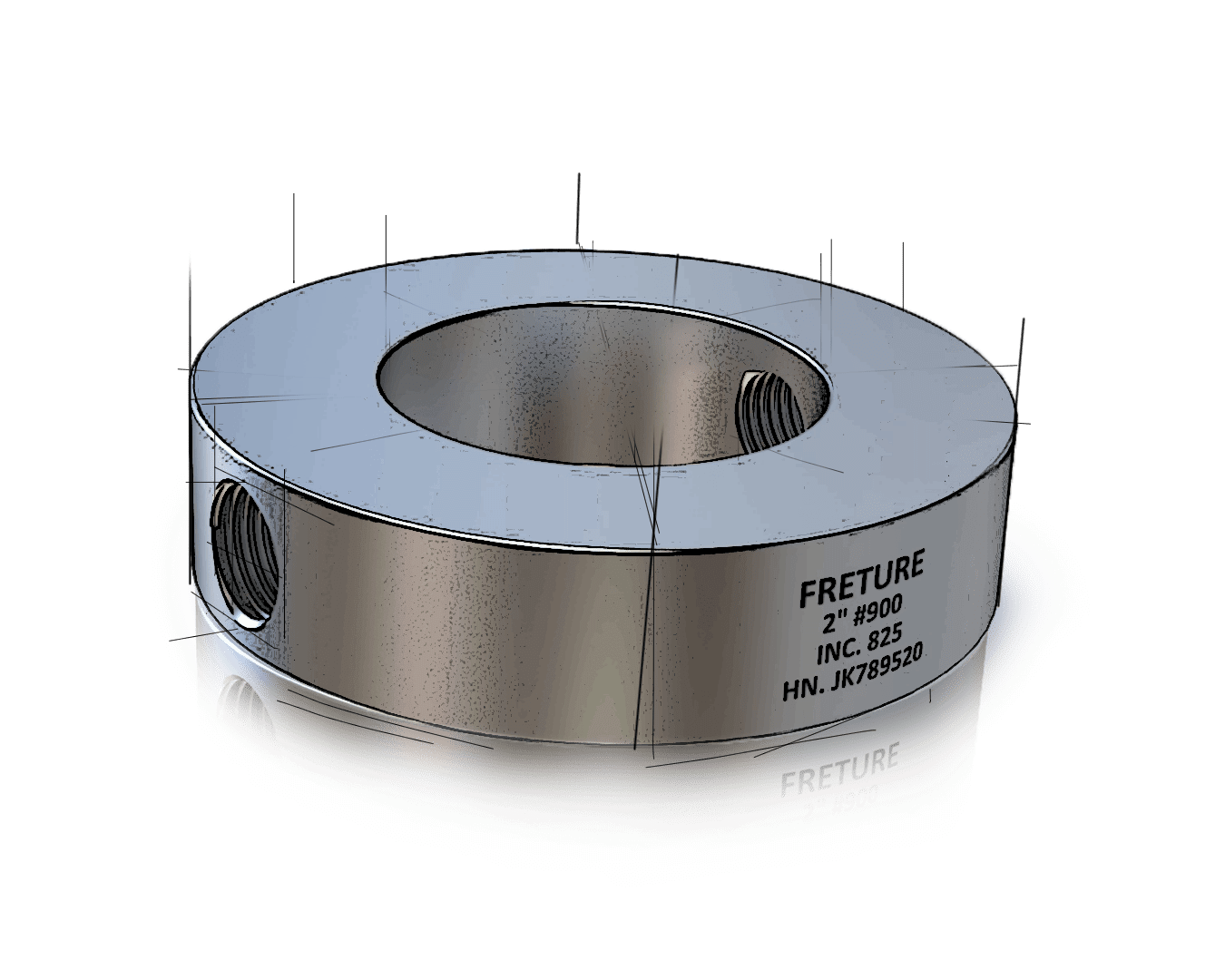
A flushing ring is a circular, gasket-like device installed between the diaphragm seal and the process flange. It features one or more radial ports through which flushing fluid can be introduced. This allows cleaning or venting of the cavity behind the diaphragm, thereby preventing blockage or contamination that might affect pressure measurement accuracy.

The integration of flushing rings is especially vital in systems using flushing ring diaphragm seals, as these seals can easily trap residue from aggressive or sticky process media. To maintain consistent functionality, the trapped fluid needs to be regularly flushed out — a task accomplished effectively through a flushing ring.

Types of Flushing Rings

Different process requirements call for different flushing ring configurations. Common types include:

1. Single Flushing Ring

Designed with one inlet port, this basic type allows flushing from a single side. It is typically used in less demanding applications where minimal cleaning is needed.

2. Double Flushing Ring

Equipped with two ports on opposite sides, this type enables complete circulation of flushing fluid. It is preferred in critical applications where thorough cleaning is necessary to prevent buildup.

3. Flushing Ring with Spacer

This design includes an integrated spacer ring to provide additional clearance between the diaphragm and process fluid. It is useful in cases where diaphragm movement must be optimized.

4. Flushing Ring with Valves

With integrated ball or needle valves on the flushing ports, this design allows manual control of flushing operations without the need for additional fittings. It is a time-saving option that also improves safety.

5. Custom Flushing Rings

Some operations may require customized rings tailored to specific pressures, temperatures, or chemical resistances. These are designed based on individual process conditions.

Industries Using Flushing Rings

Flushing rings are used across multiple industries where accuracy and cleanliness are paramount. Their presence is crucial in applications involving pressure gauges and diaphragm seals that might otherwise be compromised by fluid buildup.

Oil & Gas

Used to ensure that high-viscosity crude oils and residual fluids do not affect pressure reading accuracy in exploration and refining processes.

Chemical and Petrochemical

Employed to flush out corrosive or crystallizing chemicals that could damage diaphragm seals or skew pressure readings.

Pharmaceutical

In sterile and sanitary systems, flushing rings help maintain hygiene standards and ensure clean-in-place (CIP) or sterilize-in-place (SIP) protocols are followed.

Food & Beverage

Used to prevent product residue buildup that can affect sensor accuracy or contaminate subsequent batches.

Water Treatment and Power Plants

Helps in maintaining system efficiency and sensor performance in sludge-heavy or sediment-prone environments.

Working Principle

When installed, the flushing ring sits between the process connection and the diaphragm seal. Flushing fluid is introduced via the ports, allowing any trapped material to be cleaned out without disassembling the system. This fluid can also be used for calibration or to apply a buffer liquid in hazardous media applications.

Materials and Design Considerations

To withstand harsh conditions, flushing rings are manufactured in materials such as:

  • Stainless Steel 316/316L

  • Hastelloy C

  • Monel

  • Titanium

Material selection depends on the chemical compatibility with the process fluid. Design considerations also include pressure ratings, temperature limits, and flange standards (such as ANSI, DIN, or JIS).

Advantages of Using Flushing Rings

  • Enhanced Equipment Longevity: Diaphragm seals and pressure gauges are protected from contamination.

  • Minimal Downtime: Routine maintenance is simplified, reducing the need for system shutdown.

  • Accurate Measurement: Pressure readings remain consistent and reliable.

  • Improved Safety: Flushing rings reduce manual handling of hazardous media.

  • Cost-Effectiveness: Maintenance costs are lowered by avoiding diaphragm or gauge damage.

Conclusion

In industrial settings where fluid purity, sensor hygiene, and reading accuracy are vital, flushing rings serve as indispensable components. Whether used with pressure gauges or diaphragm seals, these accessories are engineered to enhance system reliability across industries such as oil & gas, chemical, pharmaceutical, and water treatment. By selecting the right type and material for a flushing ring diaphragm seal, maintenance operations are streamlined and instrument performance is preserved.

For industries seeking dependable solutions, high-quality flushing rings should be sourced from trusted manufacturers known for engineering excellence and material integrity.

Monday, 10 March 2025

Instrumentation Accessories - Enhancing Process Efficiency

In the complex and demanding environments of the oil and gas, pharmaceutical, and chemical industries, precision and reliability are paramount. Instrumentation accessories—such as pressure gauges, temperature sensors, flow meters, and separators—play a crucial role in ensuring accurate measurements, safety, and operational efficiency. This article delves into the significance of these accessories and their impact on process optimization across these industries.

The Importance of Instrumentation Accessories

Instrumentation accessories are integral components that support the functionality of primary instruments. They enhance measurement accuracy, protect equipment, and ensure compliance with industry standards. In sectors where precision is critical, these accessories contribute to maintaining product quality, safety, and environmental compliance.


Instrumentation Accessories in the Oil and Gas Industry

In the oil and gas sector, instrumentation accessories are vital for monitoring and controlling processes under extreme conditions. Pressure gauges and temperature sensors, for instance, are essential for maintaining optimal operating conditions in pipelines and refineries. Flow meters ensure accurate measurement of oil and gas flow rates, facilitating efficient resource management.

Separators are another crucial accessory in this industry. These pressure vessels are designed to separate production fluids into their constituent components—oil, gas, and water—ensuring that each is processed appropriately. The efficiency of separators directly impacts the quality of the extracted resources and the overall productivity of the operation.

Instrumentation Accessories in the Pharmaceutical Industry

The pharmaceutical industry demands stringent control over manufacturing processes to ensure product efficacy and patient safety. Instrumentation accessories such as sanitary pressure gauges, hygienic temperature sensors, and precision flow meters are employed to monitor critical parameters during drug production.

These accessories are designed to meet strict sanitary standards, preventing contamination and ensuring compliance with regulatory requirements. Accurate measurement and control of variables like pressure, temperature, and flow rate are essential for maintaining the integrity of pharmaceutical products.

Instrumentation Accessories in the Chemical Industry

In the chemical industry, processes often involve hazardous materials and reactions under high pressure and temperature. Instrumentation accessories like explosion-proof pressure transmitters, corrosion-resistant temperature sensors, and robust flow meters are essential for safe and efficient operations.

These accessories enable precise monitoring and control of chemical reactions, ensuring that processes remain within safe parameters. They also help in optimizing resource utilization, reducing waste, and minimizing environmental impact.

Advancements in Instrumentation Accessories

Technological advancements have led to the development of smart instrumentation accessories equipped with digital communication capabilities. These smart devices offer real-time data monitoring, remote diagnostics, and predictive maintenance features, enhancing operational efficiency and reducing downtime.

For instance, wireless pressure transmitters can transmit data to centralized control systems, allowing for continuous monitoring without the need for extensive wiring. Similarly, smart temperature sensors can provide alerts when deviations occur, enabling prompt corrective actions.

Conclusion

Instrumentation accessories are indispensable in the oil and gas, pharmaceutical, and chemical industries. They ensure accurate measurements, enhance safety, and contribute to process optimization. As technology continues to evolve, these accessories are becoming smarter and more integrated, offering greater control and efficiency in industrial operations.

Investing in high-quality instrumentation accessories is essential for industries aiming to maintain competitiveness, comply with regulatory standards, and achieve operational excellence.

Saturday, 16 March 2024

Troubleshooting Common Issues with Tube Fittings: A Guide to Ensuring Optimal Performance

Tube fittings are essential components in fluid and gas conveyance systems, providing secure connections and leak-proof seals. However, like any mechanical system, tube fittings can encounter issues that compromise their performance. In this guide, we'll explore common problems associated with tube fittings, such as leaks, improper sealing, and fitting damage, and discuss effective troubleshooting techniques to address these issues.

Identifying Common Issues:

Leaks: Leaks are perhaps the most common issue encountered with tube fittings. They can occur due to various factors, including improper assembly, damaged fittings, or excessive pressure. Leaks not only result in fluid or gas loss but can also lead to safety hazards and equipment damage if left unaddressed.

Improper Sealing: Improper sealing occurs when the fitting fails to create a tight seal around the tubing, leading to leaks or instability in the system. This issue may stem from factors such as incorrect sizing, damaged seals, or inadequate tightening of compression fittings.

Fitting Damage: Fittings can sustain damage over time due to wear and tear, corrosion, or mechanical stress. Damaged fittings may result in leaks, reduced system performance, or even catastrophic failures if not addressed promptly.

Diagnosing the Problem:

Visual Inspection: Start by visually inspecting the fittings and tubing for any signs of damage, corrosion, or misalignment. Look for traces of fluid or gas leaks, loose connections, or irregularities in the fitting's appearance.

Pressure Testing: Perform a pressure test on the system to identify any leaks or pressure drops. Use a pressure gauge to monitor pressure levels and observe any fluctuations that may indicate a leak or sealing issue.

Tightness Check: Check the tightness of compression fittings by ensuring that the nut is securely tightened without over-torquing, which could damage the fitting or tubing. For flare fittings, inspect the flare for cracks or deformations that may compromise sealing.

Addressing Common Issues:

Reassembly: If leaks are detected, disassemble the fittings and inspect the components for damage or wear. Replace damaged seals or ferrules, and ensure proper alignment and tightening during reassembly. Lubricating seals with compatible lubricants can also improve sealing performance.

Replacement: In cases of severe damage or corrosion, it may be necessary to replace the entire fitting or tubing section. Choose fittings made from corrosion-resistant materials and ensure proper compatibility with the conveyed fluid or gas.

Adjustment: If improper sealing is the issue, adjust the fitting's alignment or tighten the compression nut slightly to improve sealing without risking damage. Be cautious not to overtighten, as this can lead to deformation or cracking of the fitting.

Conclusion:

Troubleshooting common issues with tube fittings requires a systematic approach, including visual inspection, pressure testing, and appropriate corrective actions. By identifying and addressing issues such as leaks, improper sealing, and fitting damage promptly, you can ensure the optimal performance and safety of your fluid or gas conveyance system. Remember to follow manufacturer guidelines and best practices for installation and maintenance to minimize the risk of future issues.

Maintenance and Installation Best Practices for Instrumentation Tube Fittings and Accessories

 Instrumentation systems form the backbone of process industries where precision, control, and safety are critical. Within these systems, in...